Guest lectures · Workshops · Visiting faculty
An operator with a doctorate. I teach both.
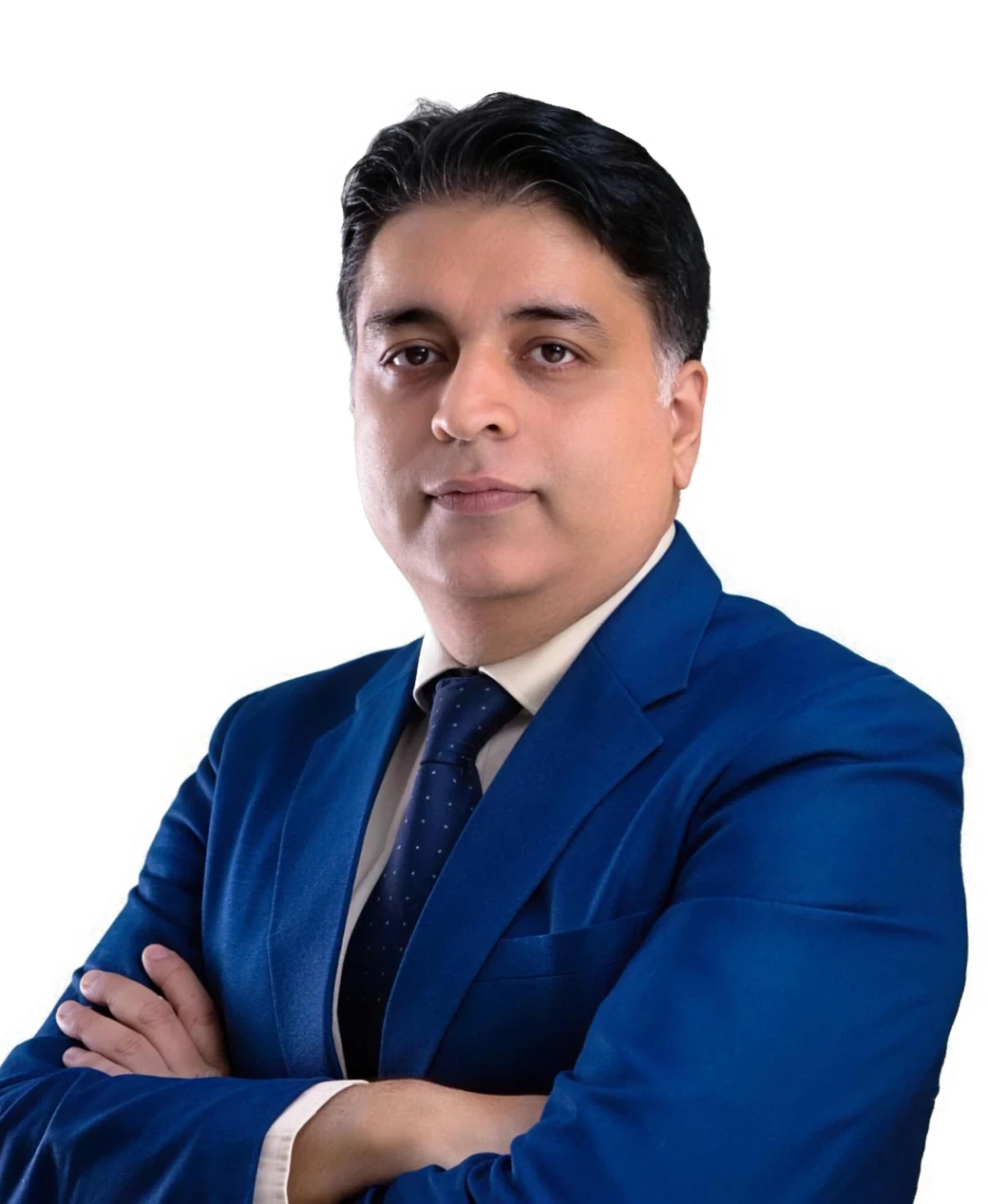
Twenty years in operating roles, from the engine room to Group COO, and a PhD on how entrepreneurship is actually learnt. Dr. Ravi Kiran Sethi.
Group COO, YC Ventures, Dubai
CEO, SEAKNOTIQ Ship Management
Chief Growth & Strategy Officer, Aequor Shipping
Founder, Start Young CEO
Every figure traces to a verified document. No revenue or profit figures are published.
In the room
Judge the teaching, not the CV.
Sixty-three seconds on the thing the whole doctorate is about: taking something complicated and making it land with people who have no background in it.
“The biggest learning has been the ability to break down complex issues into simple things.”
The Wavemakers Podcast · 03:31
“Everybody can come up with a hundred ideas. How you translate that into execution is what makes or breaks the founder.”
Same episode · 14:14
“It should not happen by chance or by function, but by choice.”
On the next generation entering the industry · 33:24
The sessions
Six sessions you can book.
Each runs standalone or as a module inside a course you already teach, with a slide set, a student handout and an assessable exercise. Open any one for its learning outcomes.
01
Teaching Entrepreneurship So It Sticks — the ADEPT Model
Faculty development · 90 min
The finding that changes how you teach it: fear of failure outranks skill gaps as the binding constraint. Emotional barriers outweigh technical ones.
By the end, participants can
- Audit their own curriculum against the five ADEPT dimensions and locate where it teaches theory in place of practice.
- Design one Dynamic Learning activity — simulation, pitch panel, prototype sprint — for a course they already teach.
- Specify a pre/post measurement scheme, and say why pitch scores and portfolios outperform exam marks for this subject.
02
Run the Entire Ship — What Founders Actually Do in Year One
UG / PG · E-cells · 60–90 min
Students expect the idea to be the hard part. It isn't. Ventures die of sequencing, not product.
By the end, participants can
- Separate the decisions that kill early ventures from the ones they assume will matter.
- Write a pre-committed kill condition for their own project, while their judgement is still clean.
- Rebuild one idea's positioning so it survives the question “compared to what?”
03
AI for Business Operations — What Changes on Monday
PG · MBA · Exec ed · 90 min
Neither technical nor speculative. AI as an operating decision rather than an IT project: one workflow, two weeks, then the next. No code, no forecasting.
By the end, participants can
- Separate workflows where AI changes cost from those where it changes judgement, and say why only one is safe to automate.
- Scope a two-week AI intervention with a named owner and a measurable before-and-after.
- Identify where durable advantage sits once the model itself is a commodity.
04
Using AI Without Outsourcing Your Judgment
Employability · 60 min
Students already use it. The question worth teaching is what they give away when they do, and what an employer still pays them for.
By the end, participants can
- Recognise the three failure modes of AI-assisted work — fabricated citation, borrowed reasoning, quietly lost skill.
- Run a personal verification routine that takes under two minutes and catches the first two.
- Articulate what an employer buys from them that a model cannot supply: accountability, and someone who can be reached.
05
Positioning Before Message
MBA marketing · PGDM · 90 min
Positioning is taught as a statement and practised as a slide. Here it is a test a brand passes or fails in front of a real buyer.
By the end, participants can
- Answer “compared to what?” for a real brand, and show why most positioning statements fail that question.
- Map category entry points — the situations that trigger a purchase — instead of demographics.
- Split a marketing plan between demand creation and demand capture, and defend the ratio they chose.
06
Engine Room to P&L — Ship Management and Maritime Commerce
Maritime academies · 90 min
The career is the credential here: marine engineer at sea, then ship broker, then ship-management CEO. The machinery a cadet already understands, connected to the commercial decisions above it.
By the end, participants can
- Trace how a vessel's operating cost is built, and identify where the money in third-party management actually sits — which is not the management fee.
- Read a fixture and a dry-dock window as commercial decisions rather than technical ones.
- Explain why fleet utilisation, not tonnage, is the operating metric that moves a shipping P&L.
- Length
- 60 to 90 minutes, or a full module across a term.
- Format
- Lecture, workshop, or a panel built around student pitches.
- Where
- In person in Dubai. Remote anywhere. Elsewhere on request.
- Notice
- Two weeks is comfortable. Less is usually possible.
For deans and department heads
The paperwork answers.
Do you meet the UGC Professor of Practice criteria?
Yes. The 2022 UGC guidelines require fifteen years of senior professional experience and explicitly waive the PhD and NET requirement. They also exclude serving and retired academics, which is the category I am not. AICTE's route is wider still, with Assistant and Associate Professor of Practice rungs at five and eight years, and an allowance of up to fifteen percent of required faculty strength on most programmes.
How do I count against accreditation?
Under AACSB Standard 3, a doctorate combined with current senior professional practice qualifies as Scholarly Practitioner or Practice Academic. That places me inside your ninety percent requirement rather than against the additional-faculty allowance. Verify it against your own faculty qualification table before you commit to anything.
Can you teach postgraduate students at a UAE CAA-licensed university?
Yes. The requirement is that postgraduate students are taught and supervised by doctoral-degree holders. Foreign qualifications also need a UAE Ministry of Education certificate of equivalency, which the institution normally files within a month of a start date. I will supply whatever your HR office needs for that.
What do you need from us?
A date, a room or a link, and the name of the course the session sits inside. I send the outline and any pre-reading two weeks ahead, and I am happy to be observed or recorded.
Background
The ADEPT model.
Adolescence, roughly thirteen to sixteen, is the window where entrepreneurial skill is most readily built. Schools deliver theory and assess recall. The gap is structural, not motivational.
A
Awareness Building
Entrepreneurship made visible before subject choices close it off.
D
Dynamic Learning
Simulations, pitch panels, prototyping. Practice, not lectures about practice.
E
Ecosystem Engagement
Mentors and competitions outside the school gates.
P
Policy & Infrastructure
Teacher training and incubation space. Without these the rest decays.
T
Tracking & Evaluation
Pre and post measurement, pitch scores, portfolios.
- Doctorate
- PhD, Business Administration. LIUTEBM University, Lusaka, 2026.
- Study
- 400 students, 30 teachers. Cronbach's α = 0.977. Four hypotheses, all p<.001.
- Published
- Three peer-reviewed papers on entrepreneurship education, 2025. IJRIAS, IJSREM and IJIRT.
- Taught
- Nine-session programme at Hindu University of America. Thirty-three courses for Start Young CEO.
ORCID 0009-0008-3637-6268. Career history in full, from marine engineer officer to Group COO, is in the academic CV.
Invite me